- Category
- Reconstructed castle, Special Historic Site (main keep closed)
- Location
- Naka Ward, Nagoya, Aichi Prefecture
- Nearest station
- Nagoyajo Station (Meijo Subway Line)
- From the city
- About 1 hr 40 min from Tokyo, 35 min from Kyoto, by Shinkansen to Nagoya Station
- Hours & admission
- Latest information
Overview
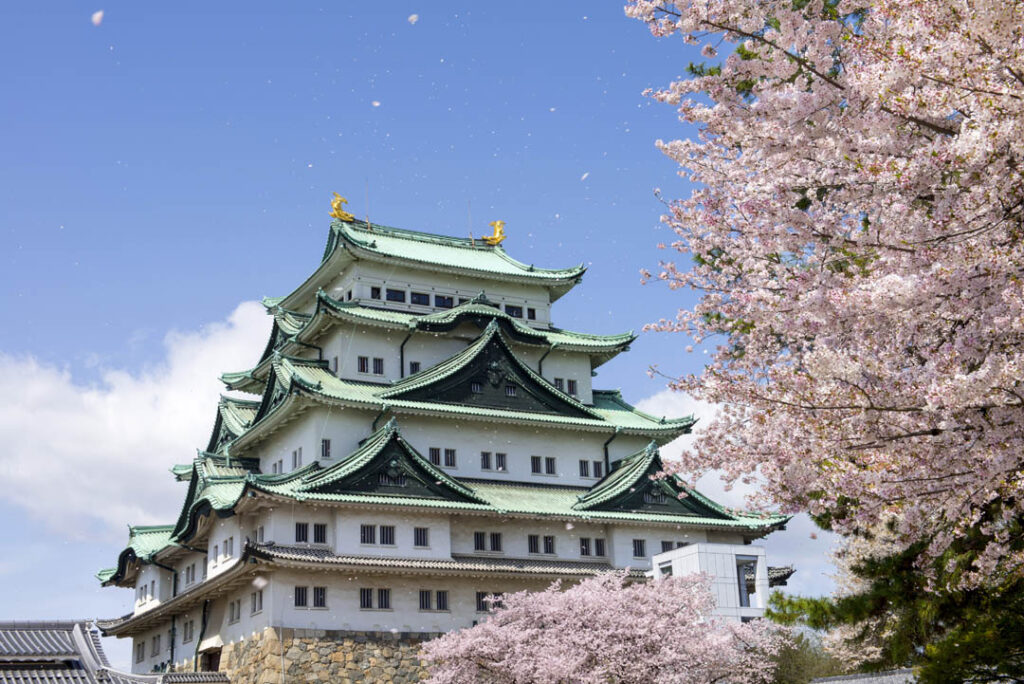
Nagoya Castle is the symbol of Nagoya, known for the pair of golden tiger-headed carp ornaments (shachihoko) on the roof of its main keep. The castle was built by the Tokugawa shogunate as a base for the Owari branch of the family, and the grounds are large, with wide stone walls and moats.
One thing to know before you go: the main keep, a concrete reconstruction from 1959, has been closed since 2018 because it no longer meets earthquake-safety standards. The city plans to replace it with a wooden reconstruction, with completion targeted in the early 2030s. Until then you can see the keep from outside, but you cannot go in. The main attraction inside the grounds is the Honmaru Palace.
History
Tokugawa Ieyasu ordered the castle built in the early 1610s to guard the route between Edo and Kyoto and to strengthen the Tokugawa hold on central Japan. It became the seat of the Owari Tokugawa family, one of the three branches from which a shogun could be chosen.
Air raids in 1945 destroyed the keep and the palace. The keep was rebuilt in concrete in 1959, and the Honmaru Palace was reconstructed over about ten years, opening fully in 2018.
What to See
The Honmaru Palace is the highlight. It was the residence and reception hall for the castle's lord and for visiting shoguns, and it has been rebuilt with traditional methods and wood, including cypress. Inside, the sliding doors and walls carry gold-leaf paintings recreating the originals, and the rooms grow more elaborate the closer you get to the areas used by the shogun.
Outside, look at the stone walls and the surviving corner turrets, and photograph the main keep and its golden ornaments from the grounds. The castle park is also a well-known cherry blossom spot in spring.
Getting There
The castle is in the middle of the city and is reached by subway. Nagoyajo Station on the Meijo Subway Line is about a five-minute walk from the castle gate. From Nagoya Station, allow roughly 20 minutes, with a subway change or by a sightseeing bus, and check a route app for the current option.
Nagoya is on the Tokaido Shinkansen line, about 1 hour 40 minutes from Tokyo and about 35 minutes from Kyoto.
Where to Eat Nearby
Nagoya has its own regional cuisine, known as Nagoya meshi. Just outside the castle gate, Kinshachi Yokocho is a castle-town style street of restaurants and shops serving local dishes. Look for:
- Miso katsu: breaded pork cutlet with a rich red miso sauce.
- Hitsumabushi: grilled eel over rice, eaten in three stages, first plain, then with toppings, then as a soup.
- Tebasaki: fried chicken wings with a peppery glaze.
- Kishimen: flat udon-style noodles in a light broth.
Restaurants open and close often, so use the map links at the bottom of this page to see what is open near the castle today.
Plan Your Visit
Allow two to three hours for the Honmaru Palace, the walls and the grounds. The palace has an earlier last entry than the grounds themselves, so arriving earlier in the day is safest.
Because the keep is closed, the visit centers on the palace and the outdoor sites, and it is a good fit for a half-day. Prices and hours change from time to time, so check the official site before you go. Tokugawaen, a garden and museum related to the Tokugawa family, is nearby if you want to add a second stop.
Staying in the Area
Most visitors stay near Nagoya Station or in Sakae, where the shopping, dining and subway connections are best. From either area, the castle is a short ride.
FAQ
Can I go inside the main keep?
No. It has been closed since 2018 while the city plans a wooden reconstruction. You can see it from outside, and you can go inside the Honmaru Palace.
Is the castle still worth visiting?
Yes. The reconstructed palace is one of the most detailed in Japan, and the walls and grounds are impressive.
When will the new keep open?
The city's target is the early 2030s, but schedules can change. Check the official site for the latest plan.